
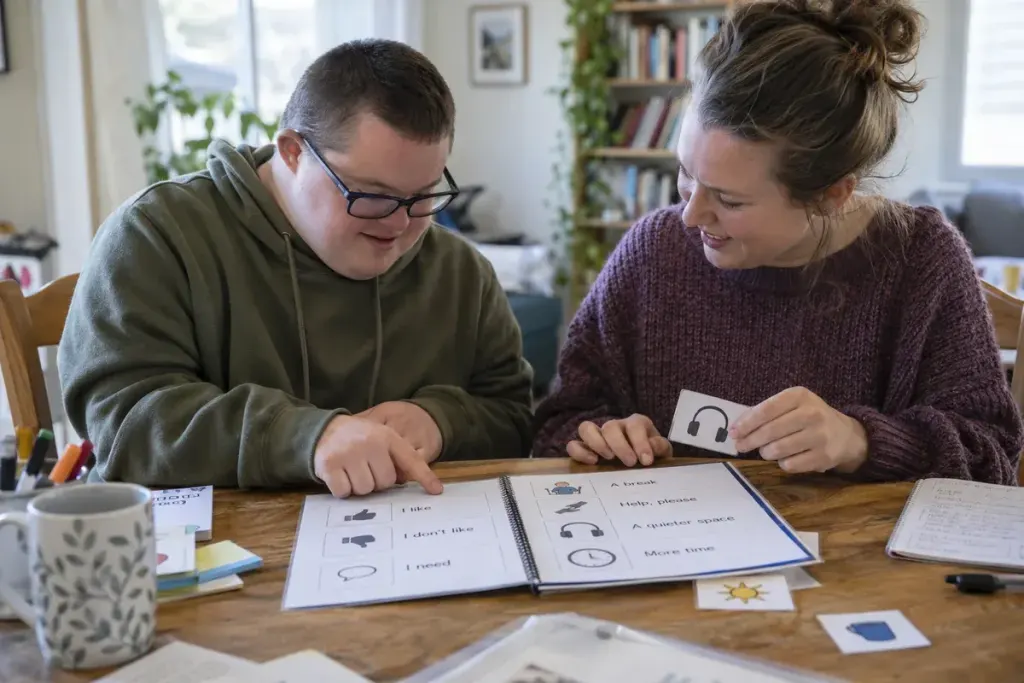
A communication passport should help someone understand a person, not replace a conversation with them. Its most useful details explain how the person prefers to receive information, express a choice and be supported when communication becomes difficult.
Begin with the person whose passport it is. Use their preferred communication method and allow time. Supporters can contribute observations, but those should be distinguished from the person’s own words and choices rather than presented as unquestionable facts.
Write instructions someone can actually use
“Communicate clearly” is vague. “Ask one question at a time and allow me time to answer” gives a reader something practical to do. Include relevant aids, preferred names, ways of indicating agreement or discomfort and situations that make understanding harder.
Mencap’s health information explains how a passport can share communication needs, preferences and useful information with staff. A general communication passport may be used in other settings too, but it should be adapted to its purpose rather than copied unchanged everywhere.
Keep the person visible in the wording
First-person wording can help when it accurately reflects the person’s preferences: “Please show me the choices” is different from a label about what the person supposedly cannot do. Avoid reducing the document to diagnoses or a list of behaviours without context.
Include what helps, not only what is difficult. A familiar object, a quieter place or a written explanation may make a conversation easier. Do not infer someone’s understanding solely from how fluently they speak.
- Agree the purpose and intended readers.
- Include practical communication preferences.
- Mark supporter observations clearly.
- Record a review date and who can update it.
- Share only the information needed for the setting.
Protect sensitive details and agree how the passport will be stored and shared, using appropriate support for decision-making where needed. An easily forwarded document can travel farther than its owner expects.
Review it when preferences, aids or circumstances change. Ask whether readers actually used it and whether the person felt better understood. A passport is successful when it opens a more respectful interaction, not when staff use it as permission to speak only to the accompanying supporter.
The document should remain a living aid owned by the person it describes. Listening still comes first.