
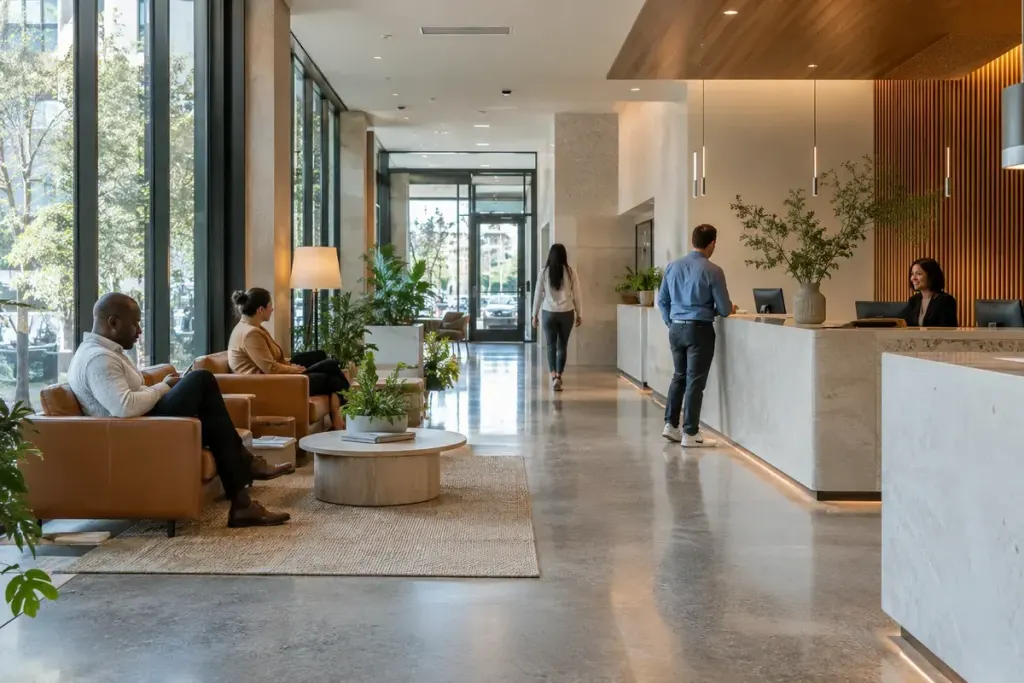
A short queue can still be difficult if it requires standing, guessing when a number has been called or explaining a private need in front of strangers. Accessible waiting starts with the whole experience, not just the average number of minutes.
Walk through the process from arrival to service. Where does a visitor learn what to do? How do they keep their place? What happens if they cannot stand in the line or hear the announcement?
Offer more than one way to wait
Provide seating where practical and keep the route clear for people using mobility aids. A person should not have to block a doorway to remain close enough to hear their turn. Give companions room to wait together when that is helpful.
A numbered system can allow people to sit, but it needs clear instructions. Explain whether they must remain nearby and how missed calls are handled. Avoid punishing someone for using the very alternative the event has offered.
If you use a phone notification system, retain a staffed option for visitors without a suitable device, connection or confidence using it. A digital queue that works only for smartphone users has merely moved the barrier.
Make the call understandable
Combine a clear visual indication with an audible announcement where possible. Staff should know how to assist someone who needs another communication method. Ask the person what works for them rather than inferring needs from appearance.
Keep conversations about assistance discreet. The visitor can describe the adjustment they need without being required to announce a diagnosis to the room.
Before a busy event, test the process with people who have different access needs and include them in decisions. Can they find the entry point, understand their place and reach the service desk without confusion? Record the problems in the process, not judgments about the visitor.
This is a practical planning approach, not a substitute for applicable accessibility requirements. Its everyday test is simple: can people wait with dignity and receive the same service without unnecessary obstacles?