
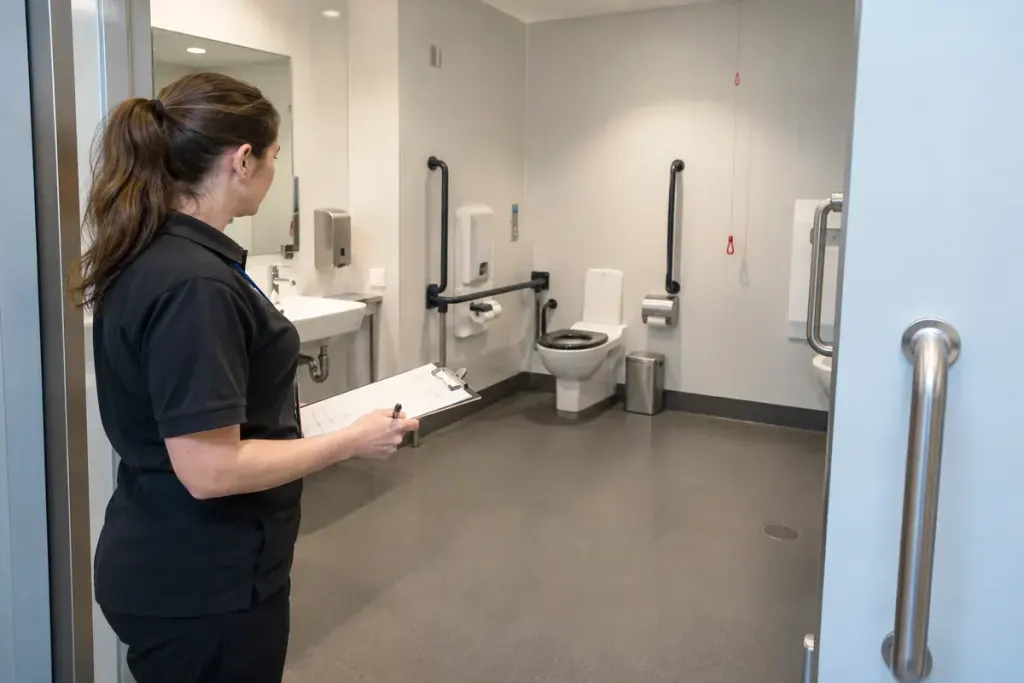
An accessible toilet becomes a convenient place to store spare chairs. The door still opens and the sign is still visible, but the space no longer works as intended. Clear floor area is part of the facility, not unused storage waiting for a purpose.
Include the whole route in the check
Walk from the public area to the toilet during a quiet inspection period. Look for boxes, cleaning equipment or furniture blocking the approach or doorway. Inside, check that the intended manoeuvring and transfer areas remain clear, using the venue’s approved layout and applicable requirements.
Do not invent a universal clearance measurement from an online photograph. Building requirements and individual needs vary. Have a competent accessibility professional assess design concerns rather than treating an informal visual check as certification.
Give displaced storage a real destination
Telling staff not to store chairs in the toilet is less effective if no alternative exists. Assign a proper storage place and include it in event setup instructions. Check the facility after room changes, deliveries and cleaning, when temporary objects often appear.
Keep the procedure respectful of privacy. Routine checks should happen when the facility is unoccupied and follow the venue’s normal arrangements. Staff should not enter or interrupt someone to complete a checklist.
Make a problem easy to report
Provide a clear contact route for faults or obstructions and assign responsibility for responding. If the facility is unavailable, explain that honestly and give accurate information about any alternative. A standard toilet is not automatically an equivalent alternative.
Ask disabled visitors for feedback without making them responsible for managing the building. Their experience can reveal a problem that a checklist missed, such as a route obstructed only during an event.
The daily goal is modest and concrete: the facility described to visitors should remain usable when they arrive. Keeping its space clear is a recurring operational task, not a one-time photograph for an accessibility page.